What Are We Actually Doing in Therapy… and Why Does It Matter So Much?
“Do you just listen to people all day?”
“How do you even help someone?”
“Isn’t it hard to sit with someone who’s so sad, in distress, or angry?”
“What are you even saying or paying attention to?”

Often coming from a place of not knowing, and shaped by preconceived ideas portrayed in movies, books, or social media, these comments are representative of what still needs to be understood in the field.
Admittedly, I held these thoughts myself prior to stepping into the world of counselling and therapy.
If every human wants to be seen, heard, and known, the bigger question becomes: how are we supporting that in a therapeutic setting?
How does one feel seen, heard, and known? This question can also be broadened beyond the therapeutic space. One might respond in many ways, through dancing, writing, friendships, family, work, nature, sports, and the list goes on.
However, from a trauma-informed and responsive lens, this looks a little different.
When traumatic moments or relational wounds occur, we often experience overwhelm in our nervous system, leading us to feel as though we have one foot in the past and one in the present. We may also experience overwhelm in our thinking processes.
Either way, something is happening too fast, too intensely, and all at once, often in the absence of an empathetic witness. When these moments occur, our brains and bodies can encode situations as unsafe or persistently overwhelming.

While we cannot erase what has happened in the past, we can build capacity for more life energy, greater presence, and deeper self-compassion.
Our brains tend to learn more effectively through lived experience rather than through attempts to understand concepts alone.
When we build therapeutic rapport through attunement, care, compassion, and curiosity, we begin to create experiential opportunities where memories can be integrated, essentially acquiring new, moment-by-moment tangible evidence.
This invites a movement toward congruence between our intellectual narrative and how our felt sense, or body, responds, seeking coherence within our systems.
While we cannot erase what has happened in the past, we can build capacity for more life energy, greater presence, and deeper self-compassion.
The big question I hold with curiosity as a clinician is: when we invite cognitive insight, how does the body follow? And vice versa, when we invite bodily reflection, how does the mind respond?
Let’s explore together.
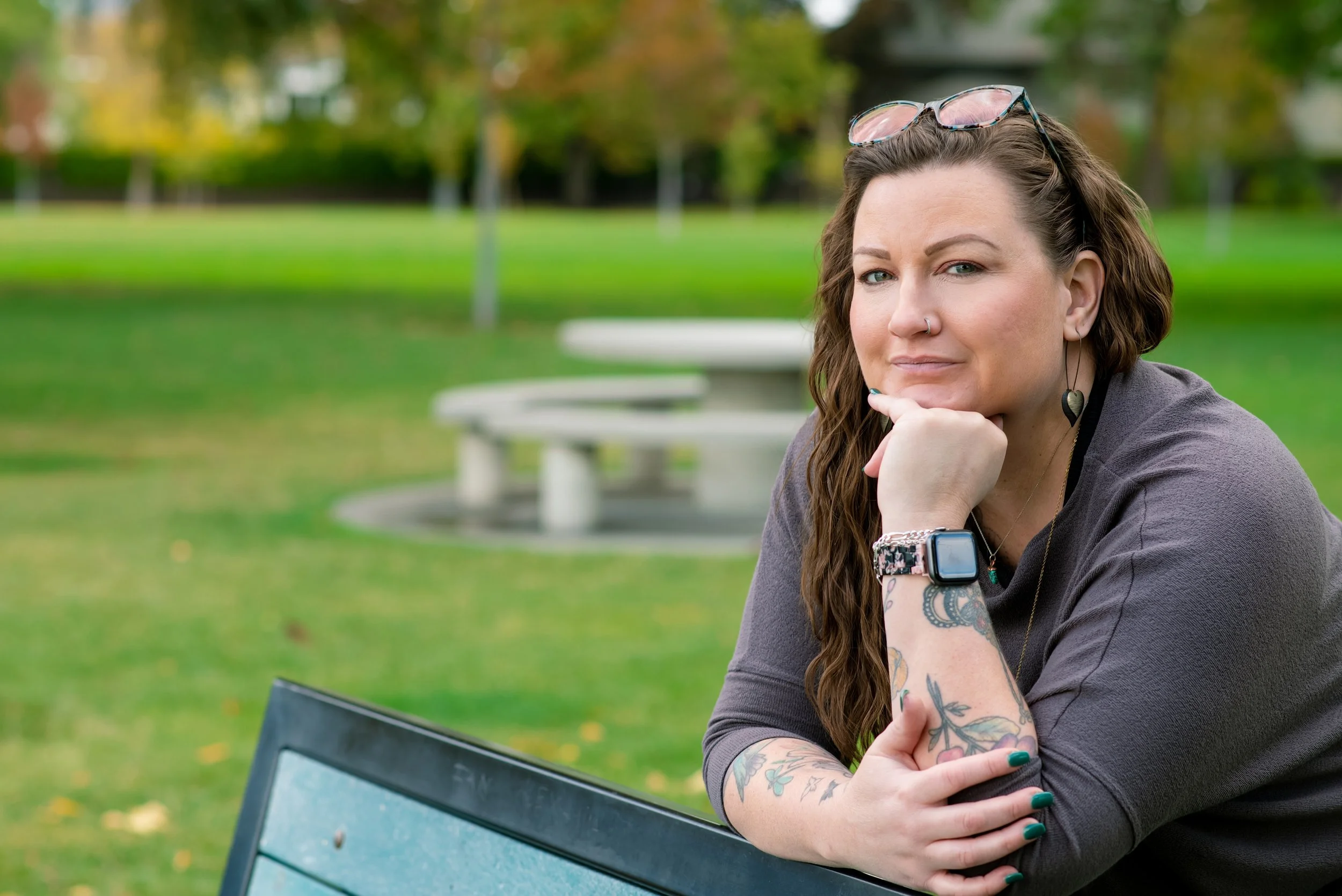
With care,
Kimberly Castle,
MTC, RCS, CC-BRT, SEP®
Reclaiming presence, fostering resilience, and returning to our amazing biology that knows what to do when given time and space.
Kimberly Castle is a Somatic Experiencing Practitioner® and a registered counsellor with a private practice in beautiful Kelowna, BC. She focuses on Kelowna Counselling She and her team specialize in Somatic Therapy where sessions are gentle, non-invasive, and guided at your pace.